 Q3
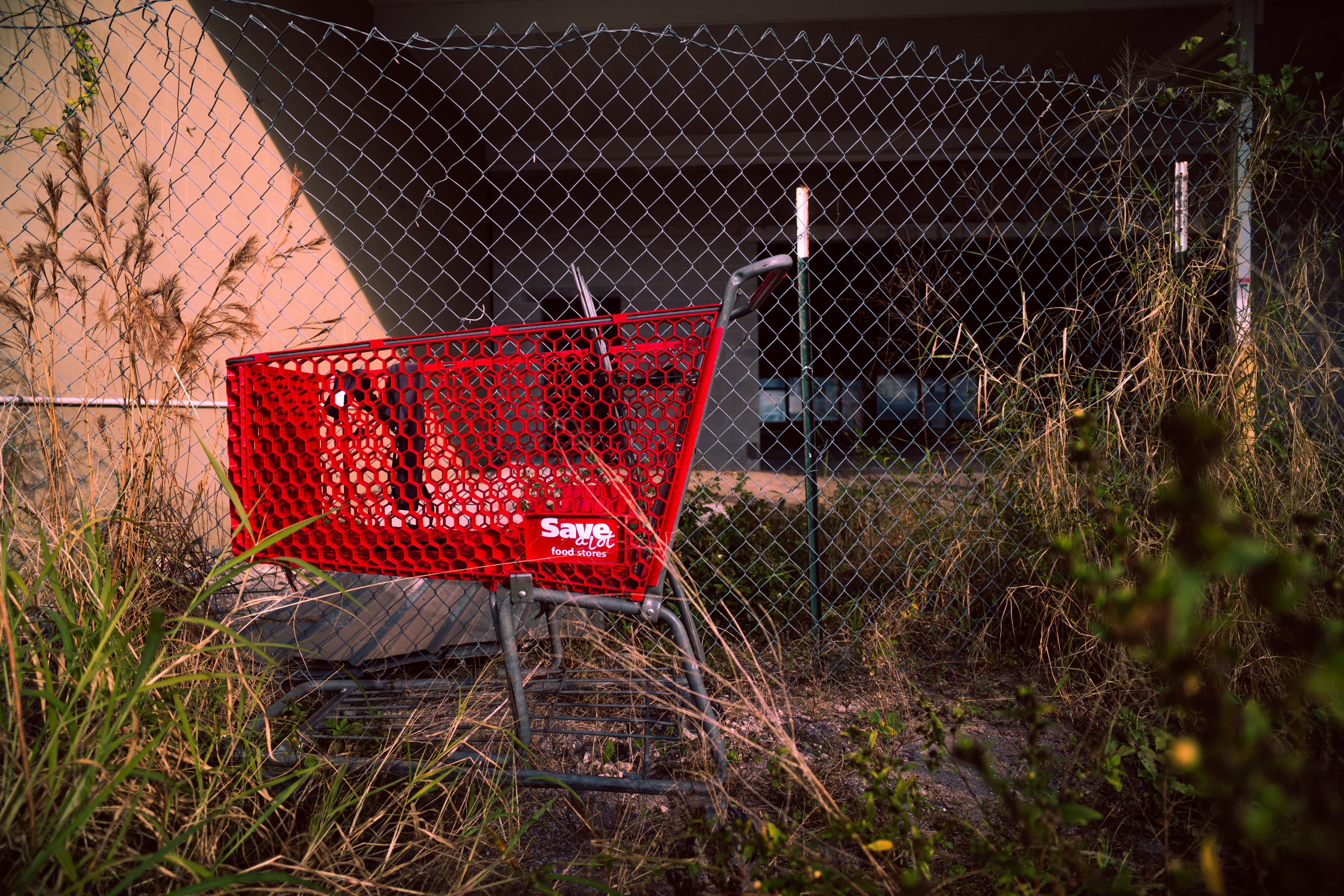
Ecommerce visitors abandon carts for two very different reasons, and only one is your problem. Roughly 42% of US online shoppers leave because they were browsing and never planned to buy. Everyone else leaves because of something your store did: shipping costs revealed at the final step, a forced account signup, a checkout with too many fields, a payment page that looked untrustworthy. That second group is where your money sits, and most of it is recoverable through design.
So the useful question is not how to stop cart abandonment. It's which part of yours is fixable, and in what order.
How much cart abandonment is normal?
Baymard Institute's aggregate of 50 separate studies puts the documented average cart abandonment rate at 70.22%. That number has barely shifted in almost twenty years, across platform changes, payment changes and the entire move to mobile.
You'll also see 77% quoted. Shopify cites that figure from Dynamic Yield data, and the gap between the two is methodology rather than disagreement. Survey-based research asks shoppers what they did. Behavioural data watches sessions, which catches more incidental adds and casual browsing. Shopify's own article notes rates vary by device and industry too, with mobile typically worse than desktop.
Treat both as context, not a target. Your own trailing average matters more, because it reflects your traffic mix, prices and audience. A store running paid social at cold traffic will abandon more than one selling replacements to repeat customers, and neither number says anything about your checkout.
What people actually abandon over
Here's Baymard's breakdown, excluding the 42% who were only browsing. Shoppers could select more than one reason, so the column doesn't total 100%. The third column is the part worth reading closely.
| Reason for abandoning | Share | Who controls it |
|---|---|---|
| Extra costs too high (shipping, tax, fees) | 40% | You |
| Delivery was too slow | 20% | You and your carrier |
| Didn't trust the site with card details | 19% | You |
| Store required an account | 18% | You |
| Checkout too long or complicated | 17% | You |
| Website had errors or crashed | 17% | You |
| Returns policy wasn't satisfactory | 13% | You |
| Couldn't calculate total cost upfront | 12% | You |
| Card was declined | 10% | The shopper's bank |
| Not enough payment methods | 9% | You |
| Unknown or other | 7% | Unclear |
Almost every line is a decision somebody made in your store, usually for a sensible internal reason. Shipping gets hidden because the margin is thin. Accounts get required because marketing wants the email. Fields get added because operations wanted a second phone number. Each choice was defensible alone, and together they cost you orders.
The biggest fix is showing the full cost early
Extra costs lead the list, and the standard response is to reveal them earlier in checkout. That's still too late.
Baymard's research on shipping costs on product pages found 64% of test users looked for shipping cost information on the product page itself, before adding anything to a cart. They want the total before they commit, because mentally they're comparing your price against two other tabs. Meanwhile 43% of ecommerce sites show no shipping cost or calculator on product detail pages at all.
The result is predictable: 21% of US shoppers abandoned an order in the last quarter purely because they couldn't see total costs upfront before starting checkout.
What to do about it, in order of difficulty:
- State a flat shipping rate on the product page if your pricing allows one. Simplest option, and the one shoppers understand fastest.
- Show a free shipping threshold with the gap remaining, both on the product page and in the cart.
- Add a postcode calculator on the product page if your rates vary by weight or zone.
- Name the cheapest realistic option as a range when you can't be exact, for instance "shipping from $5.95".
- Build shipping into the price and advertise free delivery. Costs more per order, converts better, and removes the surprise entirely.
Any of these beats a store that stays silent until step three of checkout. The anger shoppers feel at a late shipping charge is out of proportion to the amount, because it reads as something you were hiding.
Cut the checkout down
Baymard's testing shows a well-built checkout runs on 12 to 14 form elements, or about 7 to 8 actual fields. The average US checkout displays 23.48 elements, roughly 14.88 fields, by default.
That's close to double what's needed. Most stores could remove 20% to 60% of their form fields and lose nothing they use. A quick audit you can run this afternoon:
- Open your own checkout on a phone, on mobile data, and buy something
- Count every field, including optional ones and address line two
- For each field, name the business process that consumes that data
- Delete any field where you can't name one
- Combine first and last name into a single full name field
- Autofill city and region from the postcode instead of asking
- Make company name and second phone number optional, or remove them
- Default billing address to the shipping address with a checkbox to change it
- Check that autofill works, since browser autofill breaks on unusually labelled fields
Baymard's benchmark of leading ecommerce sites found the average one still has 39 separate areas needing checkout improvement. These are companies with dedicated teams. Your checkout almost certainly has more, and the first handful of fixes are usually obvious once you've done the exercise yourself rather than reading about it.
Trust is a design problem
19% abandoning because they didn't trust your site with card details is the finding stores take least seriously, because it feels unfair. You know you're legitimate. The shopper doesn't, and they're making that judgement in about two seconds on a payment screen.
What reads as safe to a first-time buyer:
- A visible phone number or live chat, ideally in the checkout header
- A physical business address somewhere reachable
- Recognisable payment logos near the card fields, not in the footer
- Your returns policy summarised in one line at the payment step
- Real product photography rather than supplier stock images
- No unexplained redirect to a differently branded payment page
- Consistent design between your store and your checkout
- Reviews that name the product, visible before checkout starts
Returns sit next to this, and 13% abandon over policy. A short, specific returns line beats a long legal page. "30 days, free returns, no questions" converts. "Returns accepted subject to conditions" does not, because the shopper now has to find out what the conditions are.
If you're working through this systematically, our landing pages and CRO service runs the audit and the rebuild, and a free site audit with Buzzing Bee will catch the technical faults, slow pages and broken elements that account for the 17% abandoning over site errors.
Recovery emails help, but they come second
Recovery emails get most of the attention in cart abandonment advice because they're the easiest thing to sell. They work. They also recover a minority of what a better checkout would have kept.
Worth understanding the mechanics before you judge your own numbers. According to Shopify's documentation on abandoned checkouts, a checkout counts as abandoned once it stays incomplete for more than ten minutes after the shopper entered their email address. You choose the sending delay yourself; there's no mandated default. Checkout records older than three months get purged from the admin, so convert anything you need to keep into a draft order.
Shopify also won't send a recovery email in several situations:
- The customer completed the purchase before the email was due
- A payment processing error occurred
- Your store doesn't ship to the customer's location
- The customer gave only a phone number, no email
- Every product in the cart is out of stock, or free with no shipping fee
- Shopify Payments flagged the attempt as high risk for fraud
Recovery also only works through the Online Store and Buy Button channels, not through POS or third-party channels. If your reported recovery rate looks poor, check these conditions before rewriting the email.
Measuring it is simple arithmetic: recovered carts divided by total abandoned carts, multiplied by 100. Forty recoveries from 500 abandoned carts is 8%. Shopify's own case material shows what better looks like, with Grind reaching a 12.3% conversion rate on an abandoned-cart series through segmentation, and Pura Vida hitting a 26% click-through rate recovering carts over Messenger with discount codes.
One warning on discounts. Train shoppers to expect 10% off for abandoning and some will abandon deliberately. Reserve the discount for the second or third message, and lead with the practical reminder first. Our email marketing service covers the sequencing side of this if you'd rather hand it over.
What the fixable share is worth
Baymard estimates large US and EU ecommerce sites could achieve an average 35.26% increase in conversion rate through checkout and design improvements alone. Against combined sales of $738 billion, that's roughly $260 billion in orders currently being lost to fixable problems.
Run your own version of that figure before you decide what to prioritise. Take last month's abandoned carts, multiply by your average order value, and that's your annual leak at current volume. Then assume you only recover the clearly fixable reasons: surprise costs, forced accounts, excess fields, missing payment methods. Even a third of that number usually dwarfs what you'd spend fixing it.
Compare that against buying the equivalent revenue through ads. Checkout work is a one-time cost producing a permanent rate improvement that lifts every channel at once. Traffic is a monthly cost producing nothing once you stop paying.
Your next six steps
In this order, because the early items are cheap and the later ones need development time.
- Buy something from your own store on a phone. Use mobile data, not your office wifi. Write down everything that annoys you.
- Put shipping costs or a calculator on your product pages. This addresses the largest single reason on the list.
- Turn on guest checkout if it's off, and move the account invitation to after the order confirmation.
- Delete every form field you can't justify. Aim for 12 to 14 elements total.
- Add trust signals to the payment step. Phone number, payment logos, returns line, all visible without scrolling.
- Then set up recovery emails, with your first message inside an hour and no discount until message two.
Most stores find steps one through four take a week and move the number more than anything they've tried in paid media. For the wider platform and growth picture, our ecommerce guides cover catalogue structure and platform choice, and our ecommerce marketing service handles the checkout work alongside the channels feeding it.
Start with the phone test today. You'll find at least three things in twenty minutes.
FAQs
What is a normal cart abandonment rate?
Baymard Institute's aggregate of 50 studies puts the documented average at 70.22%, and that figure has barely moved in two decades. Shopify reports a global average near 77% from Dynamic Yield data, which measures live sessions rather than surveys. Either way, roughly seven in ten carts never convert, and a large share of that is ordinary browsing.
Why do customers abandon carts at checkout?
Outside the 42% who were only browsing, the leading reason is extra costs: 40% abandon because shipping, tax and fees pushed the total higher than expected. Slow delivery accounts for 20%, distrust of the site with card details 19%, a required account 18%, and a long or complicated checkout 17%. Most of those are design decisions.
Do abandoned cart emails actually work?
Yes, though they recover a minority of carts. The calculation is recovered carts divided by total abandoned carts, so 40 recoveries from 500 abandoned carts is 8%. Well-segmented sequences do considerably better. The caveat worth remembering is that email recovers revenue your checkout already lost, so fixing checkout pays more per hour spent.
How long should I wait before sending a recovery email?
Shopify treats a checkout as abandoned once it has stayed incomplete for over ten minutes after the shopper entered an email address, and lets you pick the sending delay yourself. There is no mandated default interval. A common pattern is a first message within the hour, a second the next day, and a discount only in the third.
Can I stop cart abandonment entirely?
No, and chasing that is the wrong target. The 42% who were browsing will keep browsing, and comparison shopping across tabs is normal. Your real target is the fixable share: surprise costs, forced accounts, long forms, missing payment methods, broken pages. Baymard's research suggests large sites could still gain an average 35.26% in conversion from design work.
Does guest checkout really matter?
It does. 18% of shoppers abandon specifically because a store wanted them to create an account first. The account benefits you rather than the buyer, and requiring it before the sale puts the cost on the person least invested in the relationship. Offer guest checkout, then invite the account on the order confirmation page.